Can You Replace a Window Without Removing the Trim in Fort Worth?
The trim often stays on the wall, but whether it should depends on the old frame hiding behind it.
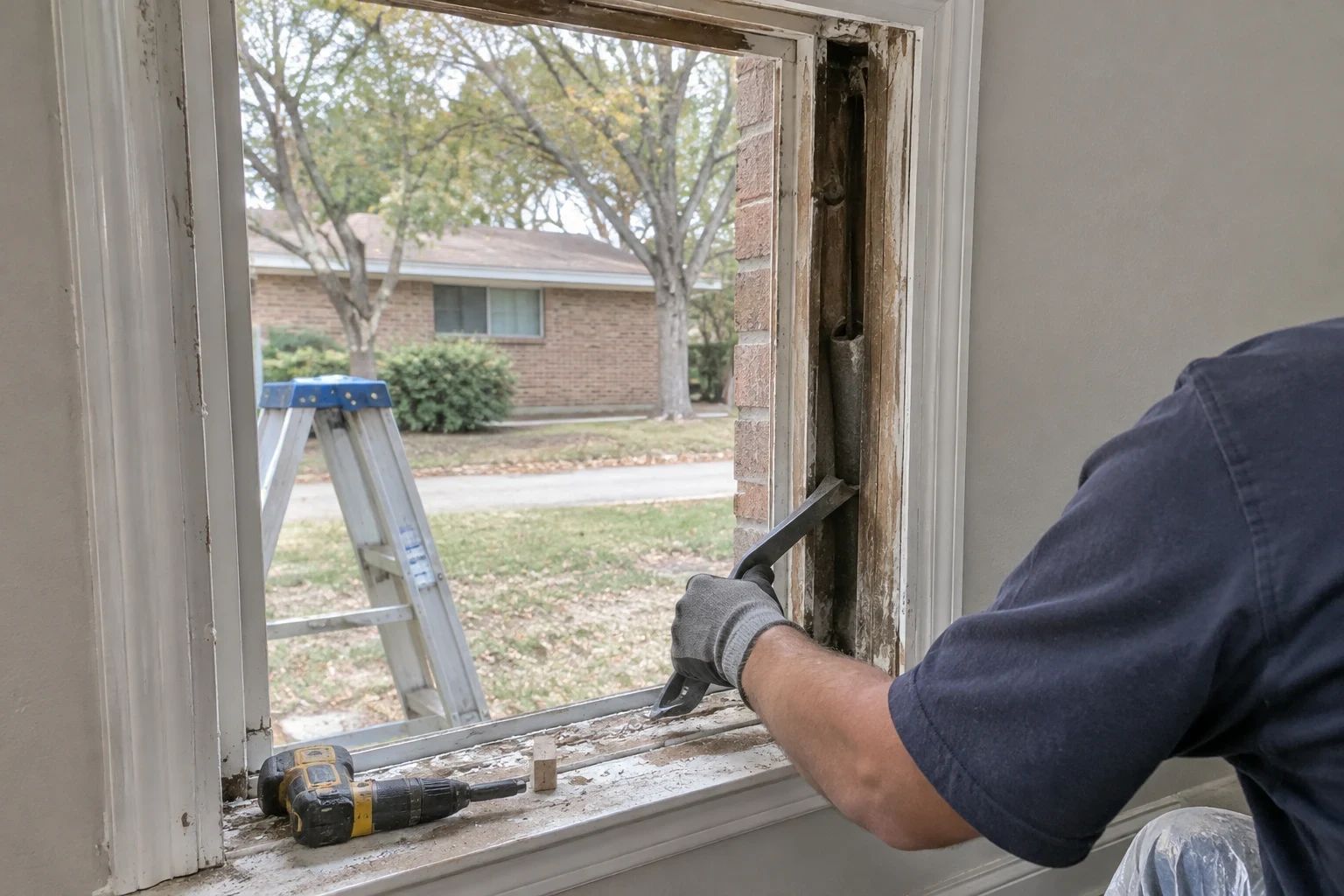
Can you replace a window without removing the trim?
Yes, in many homes a window can be replaced without removing the interior casing or exterior brick mold. An insert installation keeps the existing frame and trim, removes only the old sashes and stops, and sets a new unit inside the opening. It works when the old frame is square, dry and solid. For a free in-person consultation, reach us at (817) 286-6625.
How an insert installation keeps your trim in place
An insert, sometimes called a pocket installation, uses the old window frame as the rough opening for the new one. We pull the interior stops, the thin strips that hold the lower sash in its track, then remove the parting bead and both sashes. The casing around the window and the brick mold or exterior trim stay where they are.
The new window is built to the measured opening, set on the existing sill, shimmed level and plumb, and fastened through its own frame into the old jamb. The gap around it is filled with low-expansion foam and sealed. New stops go back on the inside, so the finished trim line looks almost unchanged.
So technically a few small pieces of trim do come off. The casing, which is what most people mean by trim, does not.
What the old frame has to look like for this to work
An insert is only as good as the frame it sits in. Before anyone recommends one, the frame needs a close look, not just a tape measure across the glass. In older homes that inspection matters more, because years of past repairs can hide what is actually going on.
Here is what we check on each opening:
- Rot in the sill and lower jambs, probed with an awl, especially where paint has cracked and let water sit.
- Square and level, measured corner to corner. Fort Worth's expansive clay soil moves foundations, and a racked opening can make a new sash bind or leave uneven gaps.
- Old water stains on drywall or plaster below the window, which point to a leak behind the trim.
- Filler, epoxy or caulk stacked on top of earlier fixes that may be covering soft wood.
- Sill slope, so water still drains to the outside once the new unit is seated.
Quirks of older windows that change the answer
Wood double-hung windows from earlier decades usually ran on sash cords and iron weights hidden in pockets beside the jambs. Those weight pockets are hollow, uninsulated cavities. With an insert, we remove the weights, cut the cords and fill the pockets with insulation before the new window goes in. Skip that step and you keep a drafty void right next to your new glass.
Homes built before 1978 may have lead paint on the stops, sashes and casing. Disturbing even a small area triggers lead-safe work practices under federal rules, which means containment, careful removal and thorough cleanup. Keeping the casing in place disturbs less painted surface, which is one quiet advantage of an insert in an older house.
Aluminum windows from mid-century ranch homes are a different case. Their frames are often fastened directly to framing behind brick, and some can be cut out and replaced with a retrofit unit that covers the old perimeter. The method depends on how that original frame was set, which is something you only learn on site.
When full-frame replacement is the better call
Sometimes the trim has to come off, and it is better to say so up front than to bury a problem behind new glass. If the sill is soft or the jambs are rotted, an insert just traps that decay. Full-frame replacement strips the window to the rough opening so we can see the framing, replace damaged wood and install new flashing tape before the window goes in.
Full-frame also makes sense if you want a different window size or style, if the opening is badly out of square, or if you want to recover glass area. An insert sits inside the old frame, so you typically lose a small amount of visible glass on every side. On a small bathroom window that may not matter. On a picture window facing your backyard, you might notice it.
- Choose insert: sound frame, you like your existing trim, and you want a cleaner, quicker install day.
- Choose full-frame: rot, past leaks, size or style changes, or an opening that has shifted.
What it means for cost, time and mess
Inserts usually take less labor per opening, since there is no casing to remove, no drywall or plaster to patch and no repainting of new trim. That is the main reason they cost less, though the window itself, glass package and any frame repair still move the price.
Full-frame work adds steps: removing and replacing casing, possibly new exterior trim or capping, flashing, and interior finish work. With inserts we still protect floors and furniture near each window, and we clean up the old sashes, weights and debris before leaving.
More questions about keeping your trim
Something not covered here? (817) 286-6625
Will the old exterior wood frame still show after an insert?
It can be wrapped in formed aluminum capping so the old wood is covered and no longer needs painting. The capping is sealed to the new window and the brick or siding.
Can I mix insert and full-frame windows in the same house?
Yes. It is common to use inserts on sound openings and full-frame on the few that show rot or leaks, and the frame inspection tells us which is which.
Will my blinds and shades still fit after an insert?
Inside-mount blinds often need adjusting, because the new frame sits slightly inward and changes the depth and width of the opening. Outside-mount shades fastened to the casing usually go right back up, since the casing has not moved.
Do I need a permit to replace windows without removing trim?
Requirements depend on the scope of the work, and changing an opening's size usually involves more review than a same-size insert. We confirm what the City of Fort Worth requires for your project before any work starts.
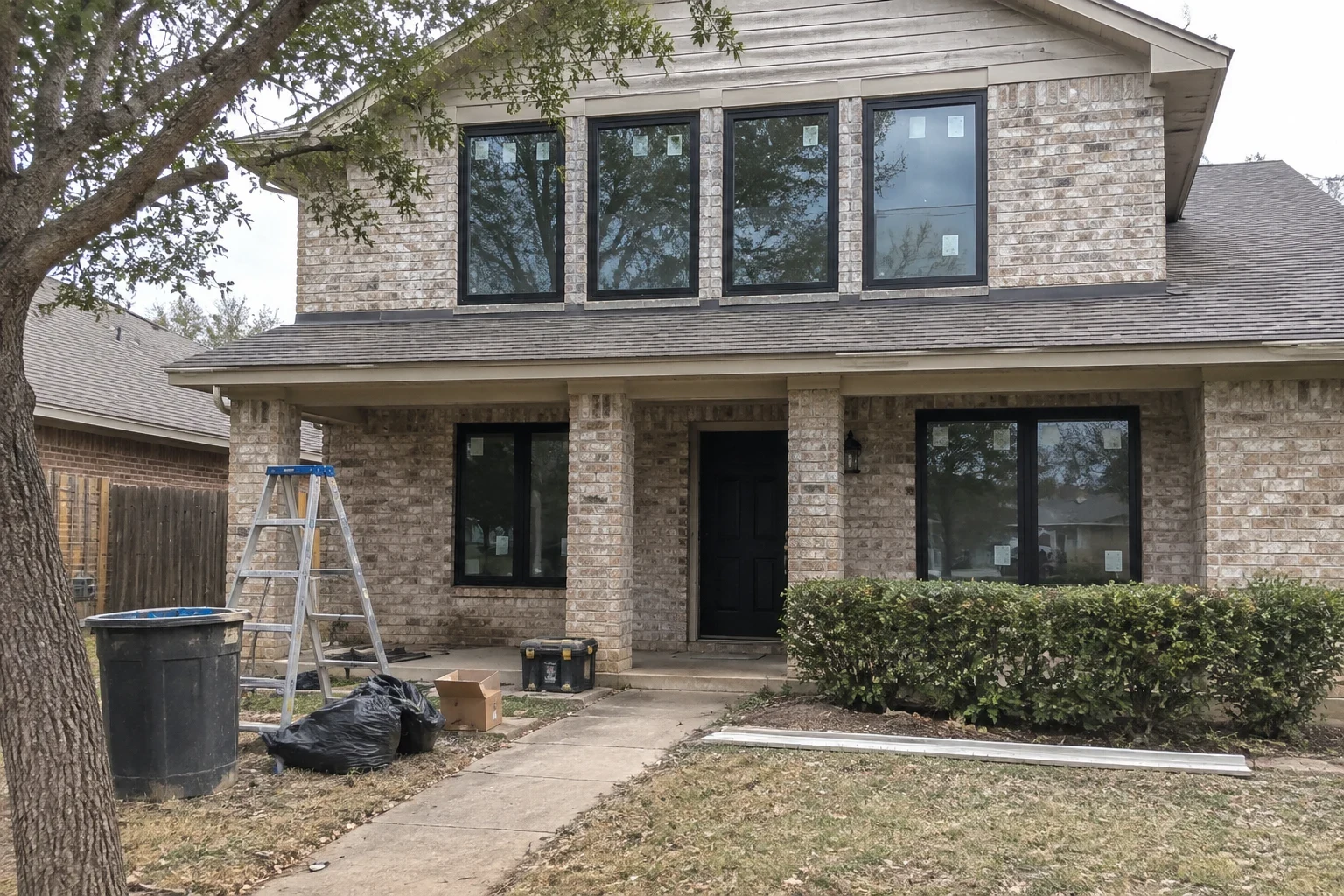
Find out if your trim can stay
We will come out, probe the sills, check each opening for square and tell you which windows suit an insert and which need full-frame work. The consultation and quote are free.